The Problem With Instant Clarity
Most people confuse the feeling of understanding something with actually knowing it — and that gap is where learning dies.
The Illusion of Understanding
There is a feeling every ambitious person knows: you read something important, it clicks instantly. The explanation is clear, the idea feels obvious, and you walk away confident. Then, days later, when you need that idea under pressure, your mind goes completely blank.
This is the danger of "instant clarity." The ease of comprehension in the moment masquerades as durable knowledge. It isn't.

What Actually Separates High Performers
In boardrooms of billion-dollar companies, a clear pattern emerges again and again. The people who keep pulling ahead are not the ones who consume the most information. They are the deep thinkers who can:
- Remember what they have learned when it matters
- Connect ideas across different domains
- Apply knowledge under real pressure
Raw information intake is not the bottleneck. Retention and integration are.
The Goal: Learn Fast, Make It Last
The solution is a four-step system built for the AI era — one that moves you from passive consumption to active, lasting mastery. The chapters ahead break down each step in full.
Wall Street Blank-Out Story
Reading information and truly understanding it are two very different things — a painful gap that can expose itself at the worst possible moment.
The Wall Street Moment
Picture this: a high-stakes call with one of the largest hedge fund clients on Wall Street. A dense financial model has already been sent over, and the conversation is going well — until the client asks a single off-script question about the broader story behind the numbers.
What follows is a full minute of silence, a complete blank-out, and eventually a panicked hang-up.
The data had been read. The model had been built. Every number had been checked. And yet, when it mattered, nothing came out.
Notes vs. Music
The problem wasn't preparation — it was the kind of preparation. There's a crucial difference between:
- Learning the notes — absorbing facts, figures, and data points
- Making music — being able to explain, discuss, and defend the ideas fluently
The model was mastered. The story behind it was not. When the client pushed past the spreadsheet, there was nothing to draw on because the material had never been internalized deeply enough to become conversational.
This is the trap most learners fall into: mistaking familiarity with mastery. Reading something, highlighting it, even summarizing it can all feel like understanding — but the real test is whether you can "explain it to him," in plain language, under pressure, without your notes in front of you.

Why This Matters Beyond Finance
This failure mode isn't unique to Wall Street. It shows up any time someone:
- Reads a book but can't recall its core argument a week later
- Takes a course but freezes when asked to apply the concept
- Reviews material right before a meeting, only to go blank mid-conversation
The issue is always the same: input without internalization. Information was consumed, not owned.
Fluency Illusion and AI's Role
Fluency illusion is the silent enemy of real learning — and AI has made it significantly worse.
The Fluency Illusion
When you read something and the answer comes easily, your brain sends a "got it" signal. Cognitive science has a name for what follows: fluency illusion, then retrieval failure. That effortless recognition feels like learning, but it isn't. Recognizing information and being able to recall it are "completely different mental events" — one is passive pattern-matching, the other is genuine knowledge.
The trap is seductive because it feels productive. You read, it clicks, you move on. No friction means no learning.
How AI Amplifies the Problem
Instant AI-generated answers make the illusion worse, not better:
- A question answered in seconds feels like a concept understood in seconds.
- A polished, well-structured explanation mimics the feeling of mastery.
- The smoother the experience, the stronger the false signal your brain receives.
What you're actually getting is "borrowed fluency" — clarity on loan from the model, with no foundation built in your own mind. The moment you close the chat window, the understanding goes with it.
This cycle repeats invisibly because each pass still feels like progress.
Recognition vs. Retrieval
The distinction worth internalizing:
- Recognition — you see an idea and it feels familiar. Passive, effortless, forgettable.
- Retrieval — you produce the idea from memory without a prompt. Active, effortful, durable.
Most people optimize for recognition because it is comfortable. Retrieval is uncomfortable by design — that discomfort is the signal that actual learning is happening.
Ebbinghaus Forgetting Curve
Most of what you learn today will be gone by tomorrow — not because your memory is broken, but because forgetting is a deliberate biological feature.
The Curve Itself
Hermann Ebbinghaus spent years in the 1880s running rigorous memory experiments on himself. His finding was stark: roughly 70% of new information vanishes within 24 hours. The drop is steep and fast, not gradual.
Why the Brain Forgets on Purpose
The brain isn't failing when it discards new information — it's prioritizing. "Forgetting is not a flaw, it's the default feature." The brain's operating principle is simple: if something isn't repeated, it probably isn't worth keeping. This was an essential survival mechanism — holding onto every piece of sensory data would overwhelm cognition entirely.
What This Means for Learners
Accepting forgetting as the default reframes the whole problem. The question stops being why can't I remember this? and becomes what system will force me to repeat this at the right time?
- Information seen once is nearly always lost.
- Repetition is the only mechanism that shifts something from temporary to durable memory.
- Without a deliberate review structure, effort spent learning is largely wasted.
Introducing the TRAAP Framework
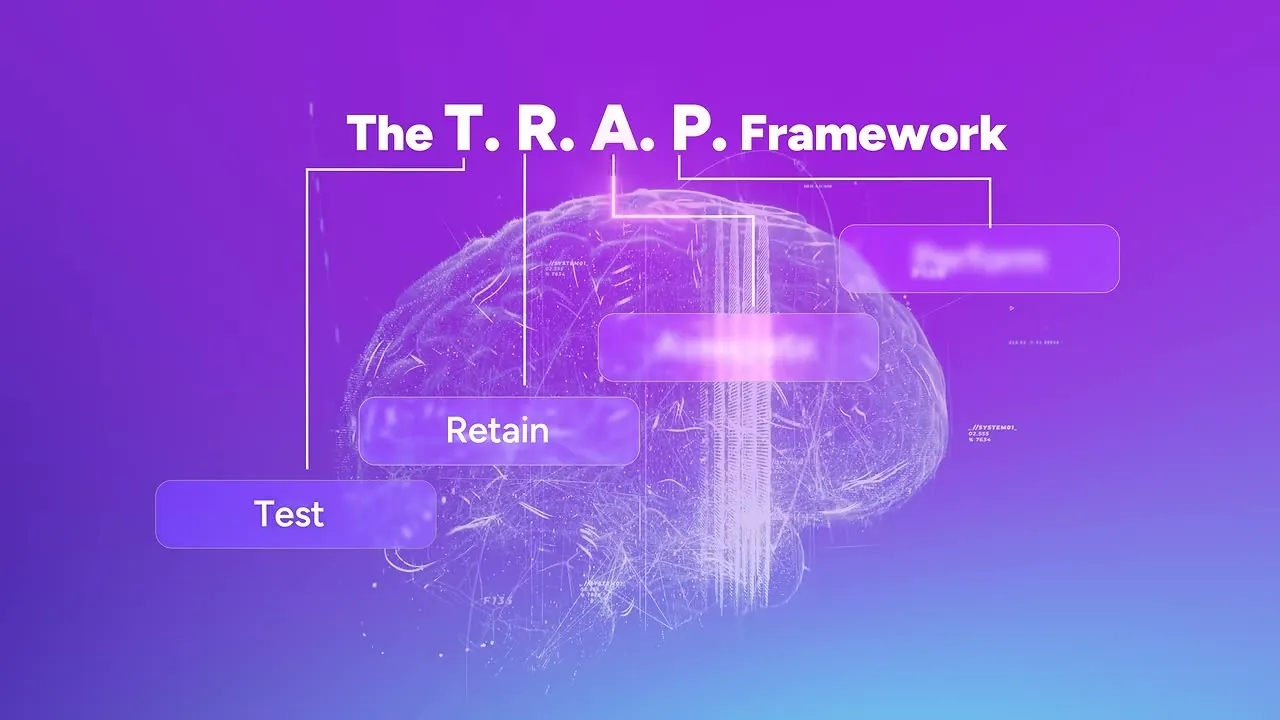
Most people confuse recognizing information with actually knowing it. The TRAAP framework — four moves built around how memory is genuinely constructed — closes that gap.
What TRAAP Stands For
The framework breaks into four steps:
- T — Test it
- R — Retain it
- A — Associate it
- P — Perform it
Each step targets a different stage of how the brain encodes and retrieves knowledge, rather than simply re-exposing you to material you've already seen.
The Core Problem It Solves
Reading notes, re-highlighting a passage, or watching a lecture twice all feel productive. They aren't — not reliably. Recognition and recall are different cognitive acts, and fluency with familiar material fools you into thinking you've learned it.
"A page full of notes is not yet music," the presenter says. Notes are what you recognize. Playing the piece from memory — that's knowledge. TRAAP is designed to move you from the first state to the second.

Why the Order Matters
The sequence is deliberate. Testing comes first — before you feel ready — because retrieval attempts, even failed ones, prime the brain for deeper encoding. Association links new material to what you already know, giving memory more hooks. Performance is the final proof: you don't just recall the idea, you use it.
Step 1: Test to Build Memory
Testing is not just how you check memory — it is how you build it.
The Science Behind Desirable Difficulties
Robert Bjork at UCLA spent decades studying durable memory and arrived at a counterintuitive conclusion: when learning feels easy, very little lasting memory is being formed. He called this tension "desirable difficulties." The harder the brain has to work to retrieve an idea, the stronger that memory becomes afterward.
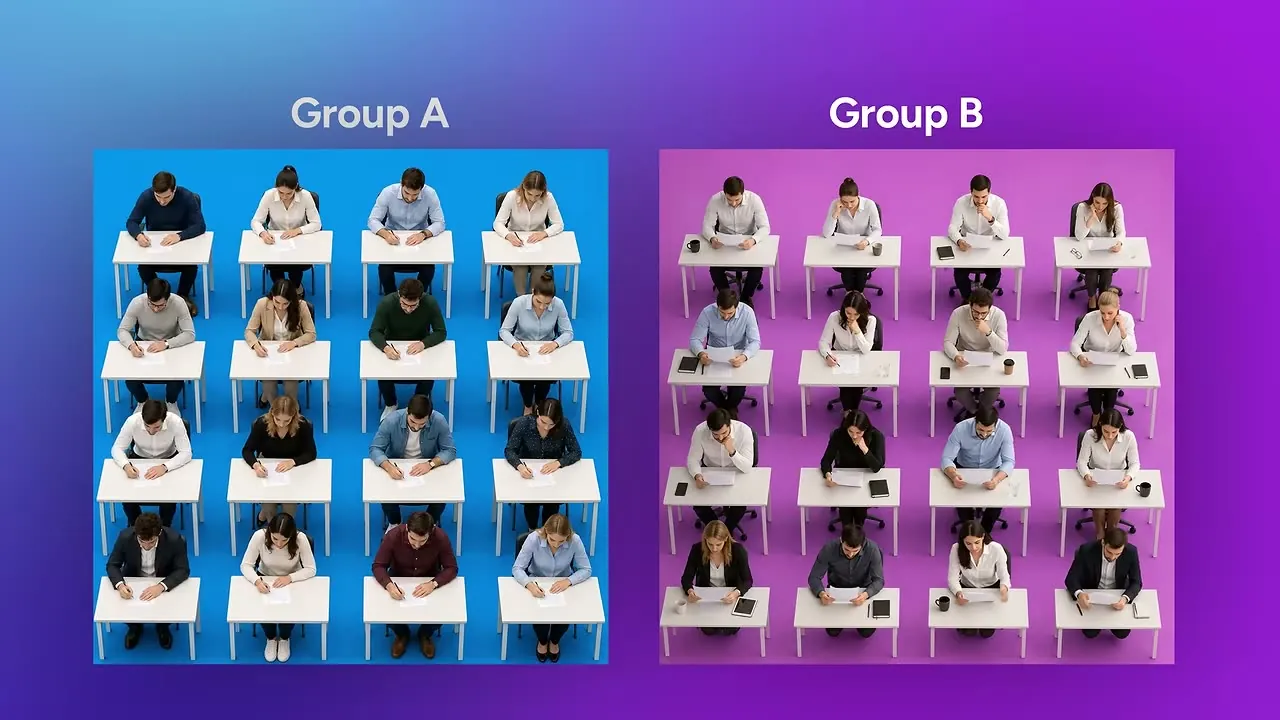
A study published in Psychological Science put this to the test. Two groups received identical reading material and spent the same amount of time with it:
- Group A was tested on the material after reading it.
- Group B simply re-read the material a second time.
One week later, Group A retained 80%. Group B retained just 34% — less than half.
Same material. Same time. Radically different outcomes.
The Action Item
No elaborate system is required. The method is simple:
- Read or study the material once.
- Close the source completely.
- Say it back — out loud, to the wall, to no one.
- If you can't recall it, you don't own it yet. If you can, it's yours.
"Testing is not just about grades and scorecards. It is one of the most powerful learning mechanisms we have."
This is the first letter in the TRAAP framework: T for Test. Every time you force a cold recall instead of passively re-reading, you are not checking your memory — you are constructing it.
Step 2: Retain With Spaced Repetition
Retaining information long-term requires precise timing — reviewing too soon or too late both undermine durable memory.
The Forgetting Problem
Understanding something today is not the same as owning it. Even MIT-trained founders who've spent years optimizing learning face this: you grasp a concept clearly, then it evaporates within days. The culprit is almost never comprehension — it's the absence of a retention system.
Why Timing Is Everything
Martin Schneider, founder CEO of RemNote, put it plainly: "The timing is the whole game." Review material too soon and your brain doesn't have to work hard, so nothing durable gets built. The mental effort of almost forgetting something — and then successfully recalling it — is exactly what cements it.
Spaced repetition exploits this by scheduling reviews at the last responsible moment:
- Too early: brain coasts, no struggle, weak encoding
- Too late: memory is gone, review starts from scratch
- Just right: memory is fading but retrievable — maximum consolidation
What Spaced Repetition Actually Does
Rather than re-reading notes on a fixed schedule, a spaced repetition system (SRS) tracks how well you recalled each piece of information and adjusts the next review interval accordingly. Items you find easy get pushed further out. Items you struggle with come back sooner. Over time, the intervals for solid knowledge grow from days to weeks to months.
Applying It Immediately
The simplest entry point is a flashcard-based SRS tool like RemNote or Anki. As you process new material — books, articles, calls — convert key ideas into discrete question-and-answer cards rather than passive notes. The tool handles the scheduling; you just show up and answer honestly.
RemNote Demo and Sponsor Segment
Spaced repetition and active recall are the two mechanisms that turn short-term exposure into long-term mastery — and RemNote is built to automate both.
The Core Problem RemNote Solves
Memory doesn't fade at a steady rate; it collapses in a curve. Most people try to fight that curve with brute repetition at the wrong times — cramming before a deadline, then losing everything afterward. "You don't have to remember to remember," because RemNote handles the scheduling automatically, surfacing each card at precisely the moment you're about to forget it.
Building a Flashcard in Seconds
The workflow is deliberately minimal:
- Open a note and type a question — e.g., What happens to the brain after 24 hours without sleep?
- Hit
==(double equals sign) to split the note into a flashcard. - Write the answer yourself, or let the AI suggest one.
- Close the source and answer cold — gaps are shown and corrected immediately.
That cold-recall step is where actual learning happens, not during reading.
Going Deeper with PDFs and Linked Concepts
Upload any PDF and RemNote turns it into a learn → test → learn → test cycle. Highlight a line and the AI can either explain it in plain language or generate a card from it. You grade yourself, and the system tracks which topics are mastered and which still need work.
Connecting ideas is equally fast. Typing @ and searching for an existing note — say, cortisol — wires the new card into a related note on stress response. "It's not a lone fact anymore. It's part of a web."
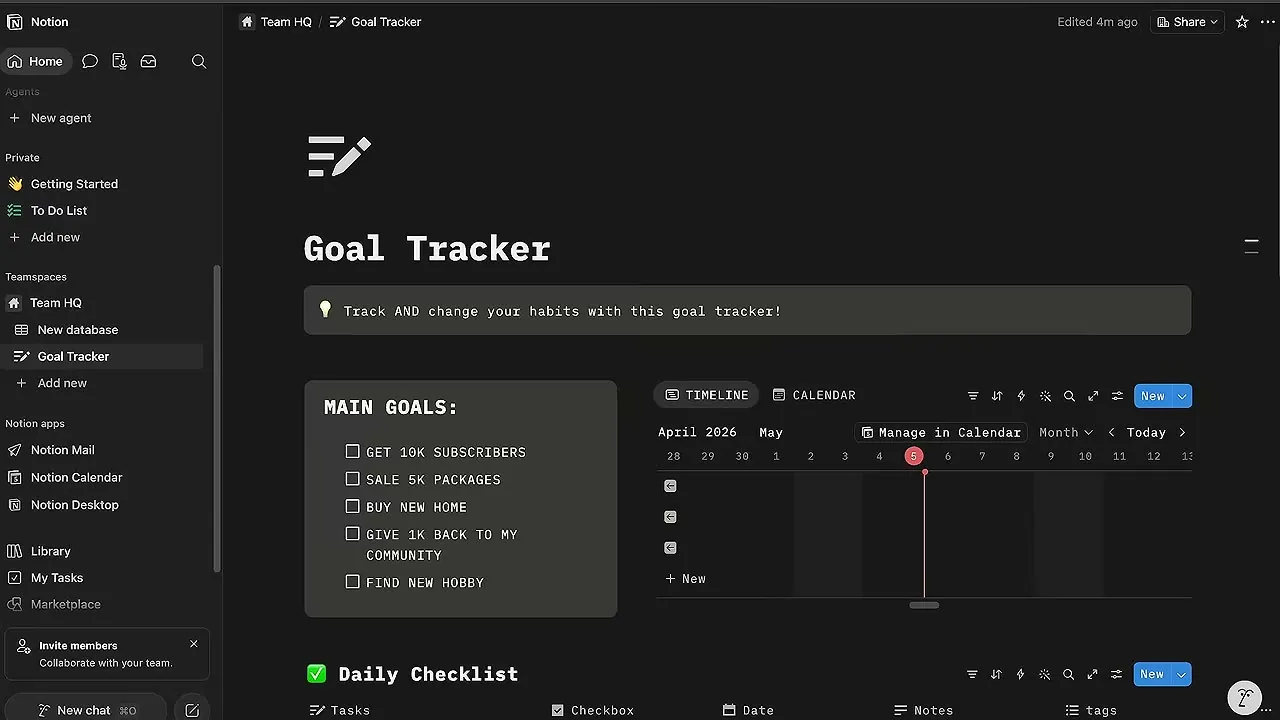
What the Tool Tracks Automatically
- Which cards you got right versus wrong
- Which concepts still have gaps
- When each card should reappear, based on your actual performance
The forgetting curve is fought in the background, without you managing a calendar of review sessions.
Pricing and Alternatives
The base app is free. A link in the video description unlocks one free month of RemNote Pro. For teams that prefer other tools, Notion works well for storing and organizing insights, and NotebookLM is strong for deep dives into source material.
Step 3: Associate Ideas Into a Web
Isolated facts fade; connected ideas endure. Research published in Science confirms that new learning becomes far more durable when it's linked to what you already know — every connection is another road back to that concept.
Why connection beats collection
Memory is not a filing cabinet. It's a web. When two people study the same material, the one who sounds fluid built a connected web; the one who freezes built "an isolated list of facts." The links between ideas are what let you retrieve them under pressure.
The real productivity trap
Most people invest their time in the wrong place:
- Designing folder structures and page hierarchies
- Adding tags, views, and database fields
- Organizing notes into tidy categories
All of that is system maintenance, not learning. A beautifully organized note vault with no mental connections is still "a graveyard of ideas." Smart people get exposed in meetings precisely because they organized information outside their head but never wired it inside.
What to do instead
Every time you encounter something worth keeping, actively link it to something you already know before you move on. Ask:
- What does this remind me of?
- Where does this contradict or reinforce something I already believe?
- What older concept does this extend?
Those questions force your brain to build paths. When you're later under pressure — a meeting, a decision, a conversation — those paths are what let you retrieve the insight. If you never built them, no amount of searching your notes will help in the moment.
Opportunity Cost and Chess Patterns
Linking new knowledge to what you already know transforms isolated facts into a retrievable network — and it only takes one question.
The One-Question Hook
Every time you encounter something worth keeping, pause and ask: "What does this remind me of?" A single analogy can lock an abstract concept in place permanently. The example is vivid: opportunity cost — a notoriously slippery economics term — clicks instantly when you picture a dinner menu. Every dish you order means not eating everything else. One mental link, and the idea "never left."
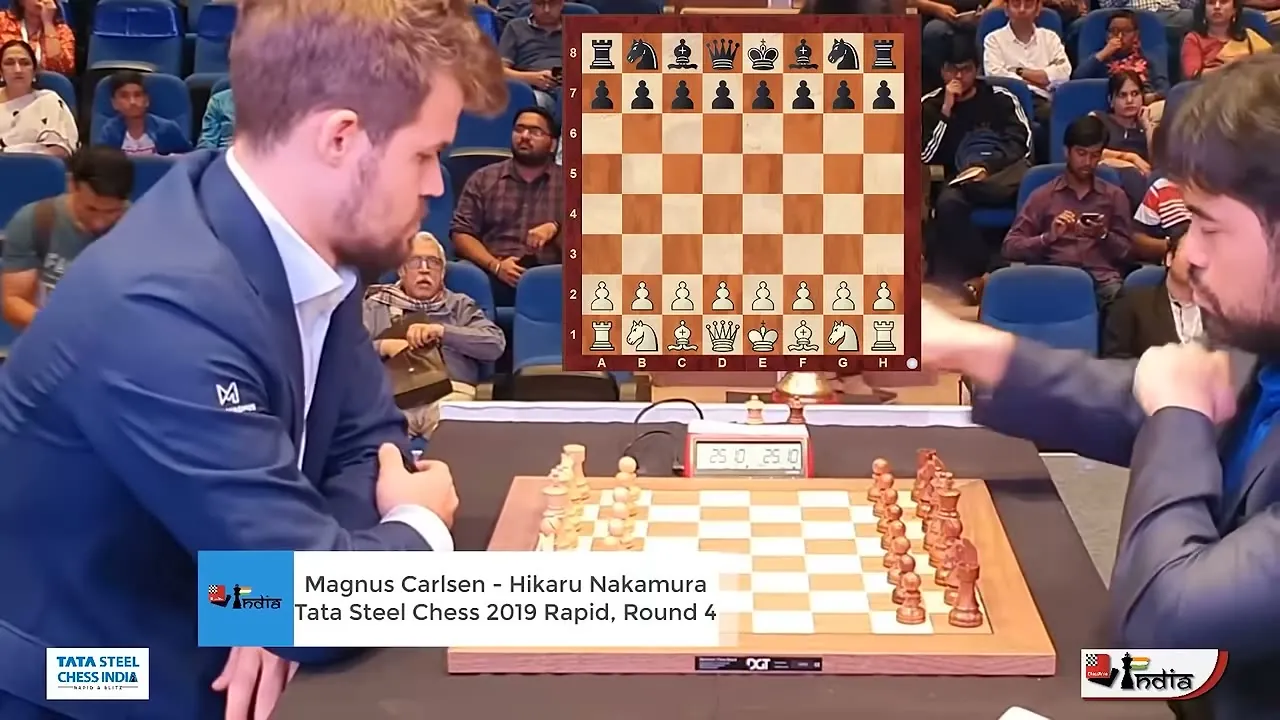
What Chess Grandmasters Actually Do
Cognitive studies estimate that grandmasters internalize between 50,000 and 100,000 board patterns over their careers. They are not memorizing isolated positions. Instead, they compress thousands of game experiences into connected patterns they can draw from instantly under pressure.
That process is the same one available to any learner:
- Encounter a new idea
- Find one thing it connects to — an analogy, a related concept, a prior experience
- Let that link do the compression work
Storage vs. Linkage
The presenter's core claim is blunt: "the power is not in storage, it's in the linkage." Memorizing disconnected facts fills a bucket with no handles. Building connections builds a network you can actually grab.
The principle is grounded in neuroscience: what wires together fires together. Under pressure — in a job interview, a negotiation, an exam — your brain doesn't retrieve isolated facts; it follows the paths you've already built.
In an era where raw information is free and AI can store anything, the ability to connect ideas is the rare skill. Retrieval speed matters less than pattern density.
The Action Item
When you learn something worth keeping:
- Ask: "What does this connect to that I already know?"
- Find one link — one analogy, one related concept, one lived experience.
- Stop there. One link is enough to anchor it.
Step 4: Perform and Build Something Real
Building something real is the move that separates knowledge from capability — and it cannot be faked or shortcut.
The MIT Model
Every January, MIT suspends formal classes for a full month. The program is called the Independent Activities Period (IAP), and it has exactly one rule: build something real. Students pair up across departments and construct whatever they want, as long as it connects to what they've studied.
The revealing part is what happens inside that month. Nearly everyone enters feeling "we don't know enough to build anything" — and nearly everyone exits having built something anyway. The act of building is the curriculum.

Why This Matters More Now
AI has made fluency and raw intelligence cheap and abundant. What remains scarce is the judgment that only comes from having tried something, watched it fail, and rebuilt it. That lived residue of experience is what no prompt can generate for you.
This is precisely why performing — creating an artifact, a project, a prototype — is the fourth and most irreplaceable learning move.
The Mind as Sculpture
The presenter reflects on spending most of his twenties unable to focus, unable to retain what he learned, failing test after test — "nine failures for every single success." Building the capacity to learn took, in his words, "painfully long."
The lesson he draws is not discouraging — it's structural. The mind is not fixed, like a photograph. It is a sculpture. Every attempt, every rebuild, every iteration carves it into a more capable shape. That shaping happens through doing, not reading.
What "Build Something Real" Actually Means
Apply this principle without waiting for permission or perfect preparation:
- Connect your learning to a tangible output — a tool, a write-up, a design, a small system.
- Partner across disciplines when possible; cross-domain friction accelerates judgment.
- Accept early failure as part of the build cycle, not a sign to stop.
- Treat each completed attempt as a permanent deposit in your mental model — it compounds.
The Marble and Michelangelo's David
Raw information without active engagement is inert — just like an unworked block of marble, it holds potential but produces nothing on its own.

The Block Nobody Wanted
In 1500, a marble block sat abandoned in a Florentine workshop. Every sculptor who examined it passed — it was cracked, oversized, considered worthless. For decades it collected dust. The block wasn't the problem. The absence of a sculptor was.
A 26-year-old Michelangelo saw past the defects. With no power tools and no shortcuts, he spent three years shaping that stone into the 17-foot David — still regarded as one of the greatest works of art ever made by human hands.

What the Marble Represents
The parallel is direct: information is the marble. Most people collect it — courses, books, articles, podcasts — and leave it sitting there. Passive consumption feels like learning, but the block remains a block.
What transforms raw information into usable knowledge is the sculptor's work:
- Retrieving what you've read instead of re-reading it
- Connecting new ideas to things you already understand
- Applying concepts before you feel fully ready
- Refining through repeated exposure and use
The Real Scarcity
The bottleneck was never the marble. Plenty of sculptors had access to quality stone. The bottleneck was the artist willing to work it.
Today, information is free and abundant — arguably the least scarce resource in human history. What remains rare is the person who treats learning as an active craft rather than a passive download. The sculptor is the differentiator, not the stone.
"Information on its own is like that block of marble with no sculptor" — the raw material holds zero value until someone applies deliberate effort to shape it into something real.
Call to Action and Closing
The closing reframes learning as an active craft — raw material only becomes valuable when you choose to shape it.
The Stone-Carver Mindset
Information, like uncarved stone, holds no value on its own. The presenter's final point is direct: you have every tool you need; the only question is whether you pick them up and use them. "The value is never in the stone. It's in the hands that choose to shape it."
Test Yourself on TRAP
The RemNote team built a one-minute quiz specifically around the TRAP framework covered in this video. Taking it does two things:
- Forces an immediate retrieval attempt, which is itself a TRAP technique
- Earns you a reward — pass the test and receive two free months of RemNote Pro
Visit remnote.com/TRAP to take the test. An exclusive link is also available in the video description.